
Introduction: The Precision Challenge in Modern Fastener Manufacturing
In the high-stakes industries of aerospace, automotive, and heavy machinery, precision is not merely a goal—it is a strict regulatory requirement. Fasteners used in these sectors, such as safety wire bolts, must withstand extreme vibrational and thermal stress. Manufacturing these components often involves drilling incredibly small, deep holes into hardened materials. When these holes must be positioned on inclined or sloped surfaces, conventional machining methods quickly reach their limits, resulting in frequent tool breakage, high scrap rates, and bottlenecked production lines.
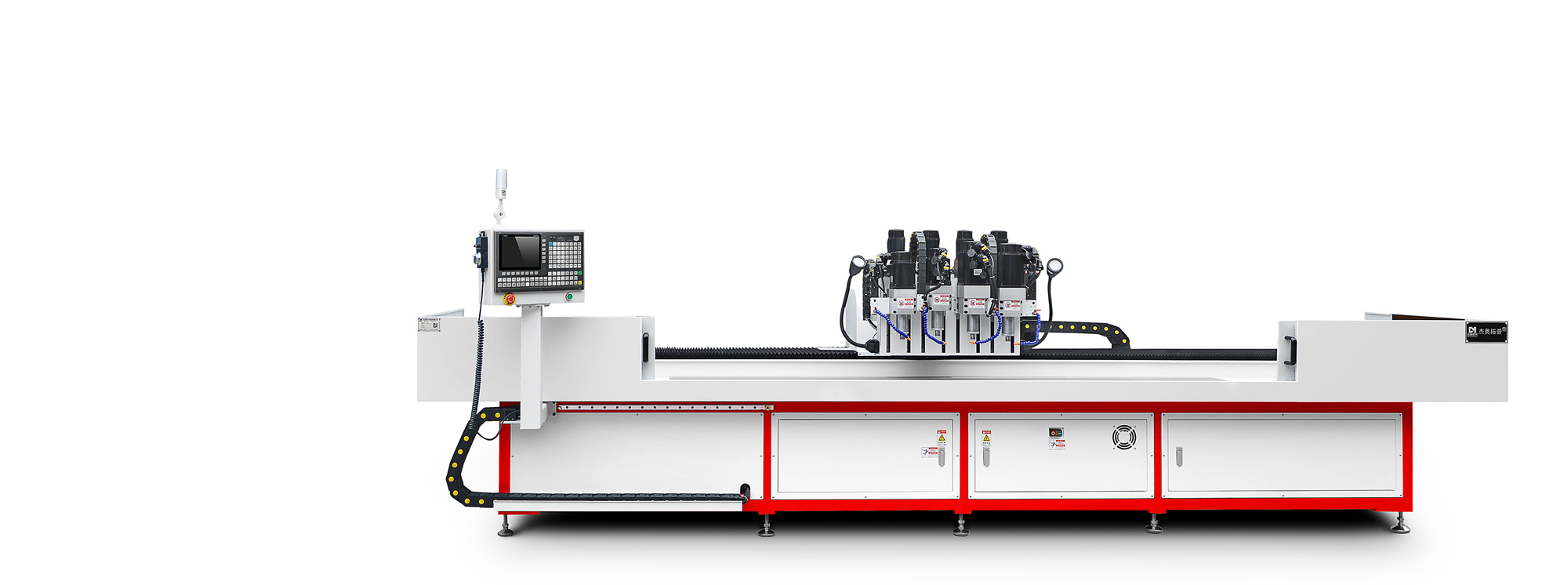
To overcome these bottlenecks, implementing a specialized micro hole drilling machine has become the industry standard for high-efficiency production. This case study explores how a leading hard alloy fastener manufacturer successfully transitioned from slow, manual processes to an automated, high-speed CNC solution. By deploying the Duomi CNC DNC-430HD, the manufacturer cut cycle times from 8 minutes to just 3 minutes per component, achieving a 166% boost in productivity while completely eliminating tool breakage.
Background: The Struggle with Hard Alloys and Inclined Surfaces
The client approached Duomi CNC with a severe production bottleneck. They were tasked with manufacturing fine-thread hex head bolts made from a highly resilient hard alloy. Each bolt required two micro safety wire holes, 1mm in diameter, to be drilled to a depth of 10mm. This task presented three distinct engineering challenges simultaneously:
-
Extreme Depth-to-Diameter Ratio: A 1mm hole drilled to a 10mm depth represents a 10:1 aspect ratio. At this scale, chip evacuation becomes incredibly difficult, leading to heat buildup and rapid tool wear.
-
Inclined Surface Deflection: The entry point for the drill was located on the sloped, angled face of the hexagonal bolt head. Attempting to drill directly into an incline causes the micro-drill bit to wander, bend, and inevitably snap.
-
Material Hardness: Hard alloys possess high tensile strength and abrasive properties, which generate extreme friction and accelerate cutting-edge degradation.
Prior to partnering with Duomi CNC, the manufacturer relied on manual bench drilling and Electrical Discharge Machining (EDM). Manual drilling was highly dependent on operator skill, averaging 8 minutes per workpiece with an unacceptable rate of tool breakage. EDM avoided tool breakage but was painfully slow, taking over 10 minutes per part, and left a rough, recast layer on the hole walls that compromised the structural integrity of the aerospace-grade fasteners.
Deep Technical Analysis: Why Conventional Drilling Fails
To understand why a dedicated micro hole drilling machine is necessary, one must analyze the physics of micro-machining. When a standard drill bit contacts a flat surface, the forces are distributed symmetrically. However, when contacting an inclined surface, the lateral forces push the tool tip sideways. For a fragile 1mm carbide drill, even a few microns of lateral deflection will exceed the material's transverse rupture strength, causing instant breakage.
Furthermore, chip evacuation in deep micro-holes is governed by capillary action and fluid dynamics. Without high-speed spindle rotation and specialized pecking cycles, micro-chips pack inside the flute of the drill. This chip packing increases torque exponentially, leading to torsional failure of the tool. Standard CNC machines lack the ultra-high spindle speeds (often requiring 30,000 to 60,000 RPM) necessary to maintain the correct chip load and surface footage for tools under 1.5mm.
The Solution: Duomi CNC Dual-Spindle Technology
Duomi CNC engineered a comprehensive solution utilizing the DNC-430HD high-speed CNC drilling center. The breakthrough lay in deploying a dual-spindle configuration that split the operation into two highly optimized, sequential steps without requiring a time-consuming tool change:
Step 1: Precision Pilot Milling
The first high-speed spindle, equipped with a micro-milling cutter, approaches the inclined surface of the hex bolt. It performs a rapid spot-facing operation, milling a perfectly flat, miniature pocket on the sloped face. This flat surface provides a perpendicular entry point for the subsequent drilling phase, completely eliminating the lateral forces that cause tool deflection.
Step 2: High-Speed Deep Hole Drilling
Immediately following the pilot mill, the second spindle—operating at up to 60,000 RPM—engages. The 1mm carbide drill enters the pre-milled flat pocket dead-center. Utilizing a highly refined pecking cycle (peck drilling), the machine rapidly retracts the tool to evacuate chips while an integrated high-pressure cutting-fluid system flushes the cavity. This dual-spindle approach ensures the drill bit remains perfectly aligned, cool, and free of chip packing throughout the entire 10mm depth.
| Metric | Result |
|---|---|
| Cycle Time | 3 min per bolt (down from 8 min) |
| Productivity | +166% vs. manual bench drilling |
| Drill Deflection | Zero, even on inclined surfaces |
| Spindle Speed | 60,000 RPM, micron-level runout |
Case Data: Side-by-Side Performance Comparison
The transition to the Duomi CNC micro hole drilling machine yielded immediate, measurable improvements across all production metrics. Below is the comprehensive performance comparison between the traditional methods and the Duomi dual-spindle CNC solution:
| Metric | Manual Bench Drilling | EDM (Electrical Discharge) | Duomi Dual-Spindle CNC |
|---|---|---|---|
| Cycle Time (2 holes) | ~8 min | ~10+ min | ~3 min |
| Productivity | Baseline | Below baseline | +166% faster |
| Hole Wall Quality | Poor — scoring, chatter marks | Rough — recast layer, micro-cracks | Smooth, precise, burr-free |
| Positioning Accuracy | Inconsistent on slopes | Drifts with electrode wear | Repeatable CNC precision |
| Tool / Consumable Wear | High breakage from deflection | High electrode wear | Minimal — flat pilot eliminates deflection |
| Thermal Impact | High friction heat, risk of work-hardening | Heat-affected zone (HAZ) | Controlled by coolant |
Technical Specifications of the DNC-430HD
The DNC-430HD is purpose-built for micro-hole and deep-hole drilling applications where standard machining centers fail. Its rigid structure, high-precision guide rails, and ultra-high-speed spindles make it the ideal platform for processing difficult-to-machine materials like hard alloys, titanium, and stainless steel.
| Parameter | Value |
|---|---|
| Repeated Positioning Accuracy | ±0.02mm |
| Spindle Speed | 3,000–60,000 RPM |
| Spindle Power | 0.55–3.0 kW |
| Spindle Taper Hole | ER20 |
| Borehole Diameter Range | 0.15–4mm |
| XYZ Machining Stroke | X 400mm / Y 300mm / Z 120mm (customizable) |
| X-Axis Speed | 30–60 m/min |
| YZ-Axis Speed | 25 m/min |
| Guide Rails & Ball Screws | HIWIN (Taiwan) / PMI precision grade |
| Compatible Materials | Hard alloys, carbon steel, stainless steel, aluminum, copper, titanium |
| Certification | CE Certified |
Conclusion: Elevating Production Standards with Duomi CNC
By replacing outdated manual and EDM processes with Duomi CNC's advanced micro hole drilling machine, the manufacturer successfully resolved a critical production bottleneck. The combination of high-speed dual-spindle technology, precise pilot milling, and optimized pecking software allowed them to achieve unprecedented cycle times of just 3 minutes per part. Tool breakage was completely eliminated, saving thousands of dollars in consumable costs and reducing machine downtime.
Whether you are machining hard alloys, titanium, or aluminum, Duomi CNC provides the engineering expertise and high-precision machinery required to elevate your production standards. Invest in reliability, speed, and unmatched precision with Duomi CNC solutions.